


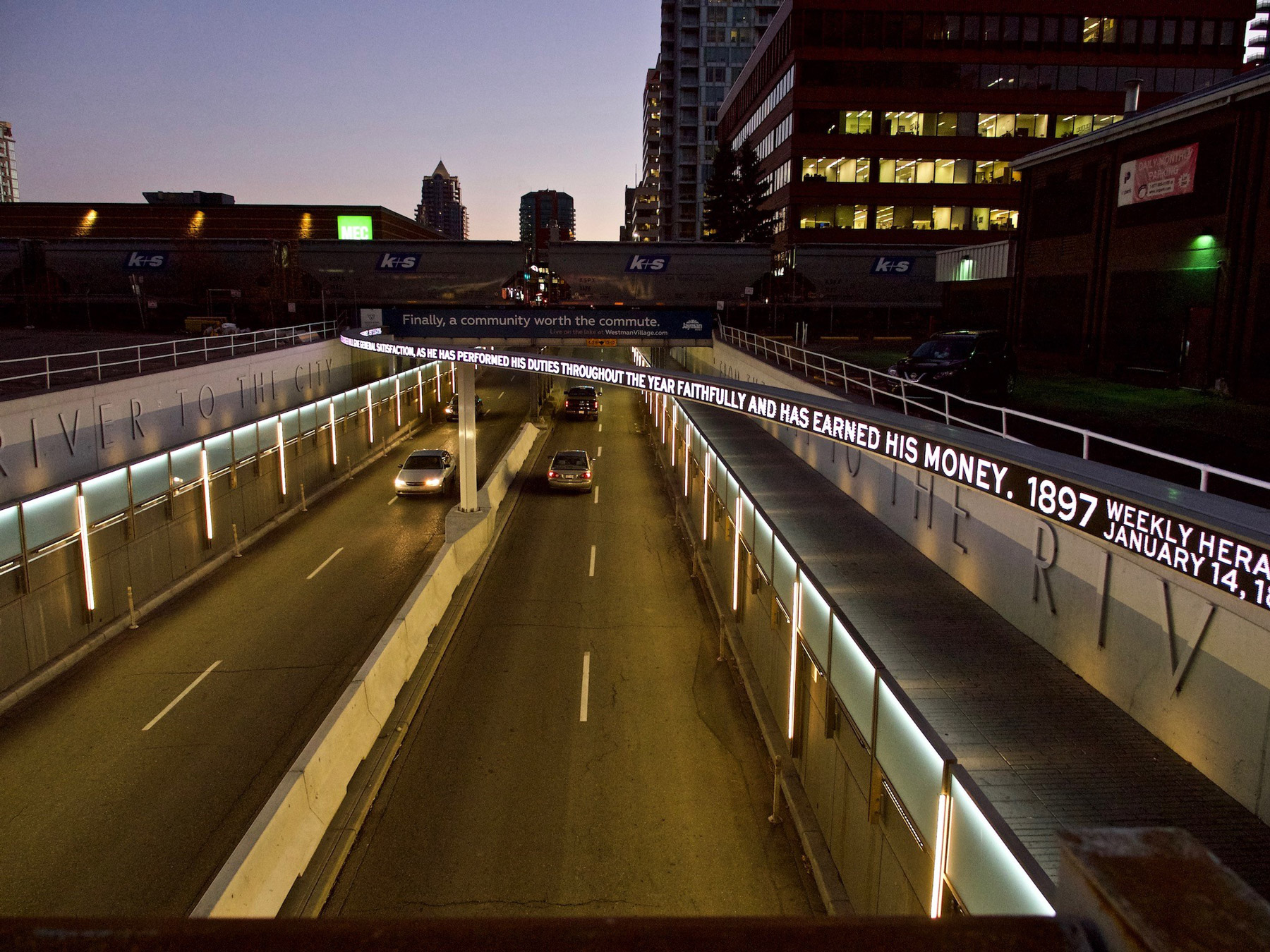
Developing a Collaborative Preventive Conservation Approach
for the City of Calgary’s Public Art Collection
Calgary’s adoption of a Percent for Public Art Policy1 in the early 2000s, partnered with the region’s notorious boom and bust economy, fueled rapid growth of The City of Calgary Public Art Collection over the last two decades.
Prior to the adoption of the Policy, the collection had been growing through artwork acquisitions, commissions, and donations by a myriad of players over the past century. Now consisting of over 1,300 artworks ranging from portable small sculpture and 2-D works to site-specific installations, the collection has become a cornucopia of different media and artistic practices—including multi-faceted artworks that engage with their environment and the public in complex and interesting ways.
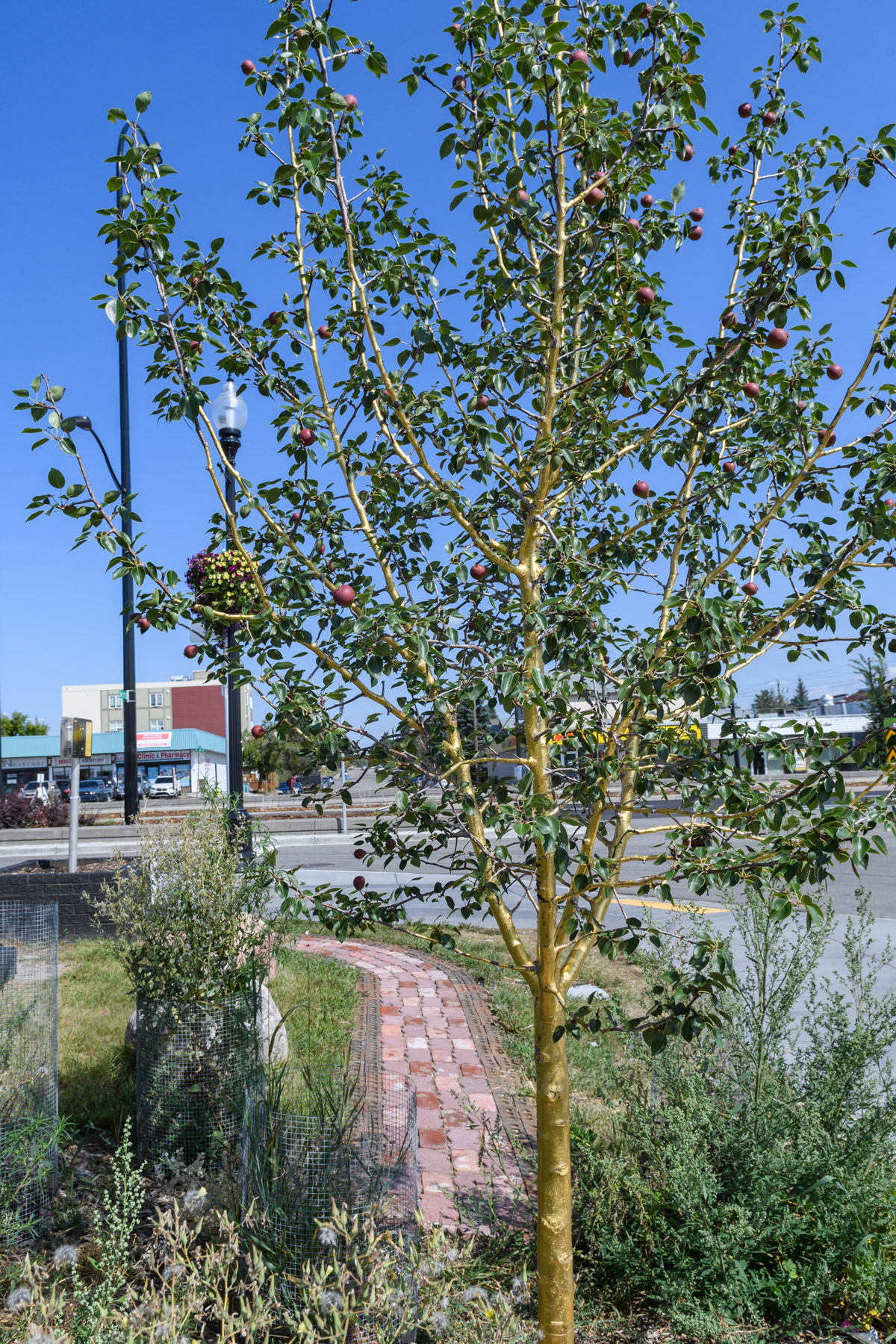
Mia + Eric, Pick, Pluck Perch, 2020
Installation, sculpture, social practice
Courtesy The City of Calgary
The artwork Pick, Pluck, Perch by local artist team Mia + Eric, for example, integrates the sculptural form of a beautiful gilded pear tree with social practice work: the collection and sharing of recipes for the artwork’s community to harvest its fruit. Numerous light and software-based artworks, such as Calgary Scroll by David Rokeby or Wishing Well by Living Lenses, create unique blends of interactive time-based media art and site-specific installations, that simultaneously transform spaces while being shaped by the citizens that encounter them. Meanwhile, artworks in the portable collection continue to be rotated throughout public sites around the city, creating moments of pause or delight for those who move through their space.
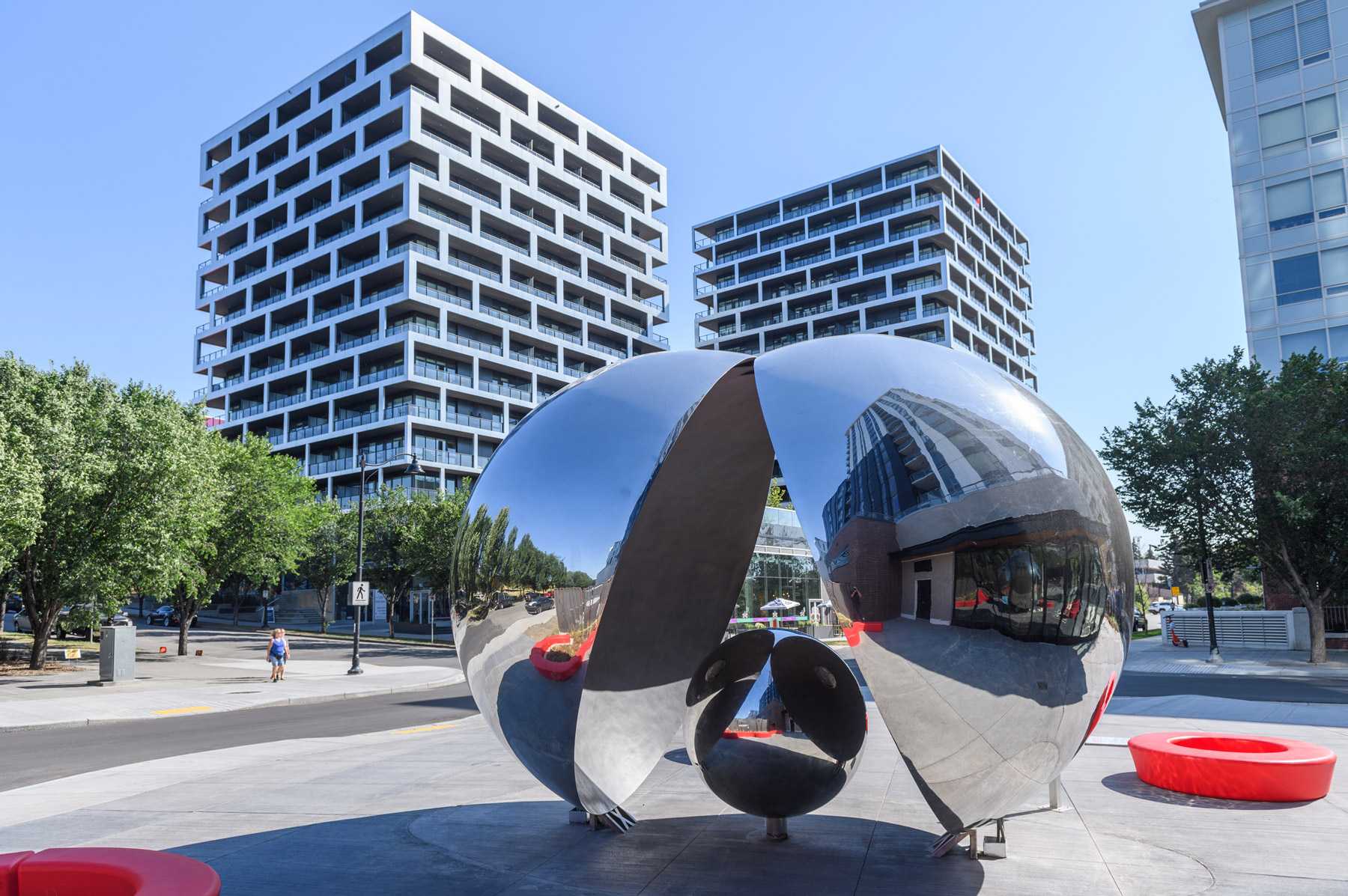
Living Lenses, Wishing Well, 2012
Site-specific interactive installation in the form of a mirror-polished stainless steel sculpture that can be texted a greeting that is translated into a display of light and sound
Courtesy The City of Calgary
The rapid growth of the collection, alongside the larger scale and integrated nature of many of its new commissions, triggered a surge in maintenance demands that underlined a need for the program to adopt conservation strategies – eventually leading to the hiring of internal conservation staff. The benefits of having internal staff conservators regularly monitoring and maintaining the public art collection goes beyond informing conservation priorities and maintenance plans. This ongoing work also results in the conservators’ deepened familiarity with the collection and understanding of the specific environmental and public factors that impact artworks in various settings throughout the city. The team’s familiarity with local considerations, and their first-hand experience of how different artwork materials and designs fare under these conditions over time, become an invaluable resource during the design review of new artwork commissions that cannot quite be matched by external conservation consultants.
A collaborative conservation approach
The principle of artwork stewardship has long been engrained into the ethos of program staff managing the public art collection. The program doesn’t position itself as the owner of this collection, but rather as its steward—caring for it on behalf of citizens and making it accessible for current and future generations of Calgarians. Within this context, our conservation team adopted an artist-led, conservator supported approach, which respects the autonomy of artists to direct how their artwork is cared for. This approach also embraces the understanding that the definitions of care are subjective, that conservators are not always the appropriate caretaker for the work, and that artworks are not static. Conserving public art is to enter a relationship with these dynamic artworks, as well as the artists who created them. Preventive conservation in this context is as much a process of learning about the artworks as it is about prescribing conservation recommendations to them.
Integrating preventive conservation into earlier stages of artwork planning and design organically evolved into a highly collaborative process with the artist team, and we soon recognized the importance of relationship building in the conservation context. Embracing a collaborative, artist-led approach to preventive conservation transforms the conservator’s role from a reviewer or gatekeeper to a supportive resource and problem-solver: part of a team trying to realize the artist’s concept within—rather than in spite of—environmental, safety, and maintenance parameters. Participating in this way builds trust and understanding, and helps create a unified end goal of an artwork that achieves the artist’s intention and is built to endure its environment for the duration of its intended lifespan. The conservator takes on a number of different roles in this context:
The conservator as an advocate: safeguarding the future artwork by speaking out against oversights or cost-saving decisions during design that may compromise its durability and resilience. In certain scenarios, the conservator may also become the advocate for the artist: defending their moral rights, their decision-making authority over their own concept, or at times their choices of materials that may not carry as much of a maintenance or conservation risk as other reviewers perceive.
The conservator as a resource: sharing their knowledge of materials as well as their ability to research new material applications if the artist chooses to venture into unchartered waters. Having the benefit of working internally with the public art collection over time, the conservator also serves as a resource of what specific agents of change can be anticipated at the artwork site. Learned details – such as the types of snowplows used on a particular plaza, the changing patterns of graffiti incidents observed within a neighborhood over the past few years, the travel range of iron filings emitted from LRT tracks, or the habits of nesting sparrows along the river – culminate into a unique knowledge resource that supports artwork design.
The conservator as a steward: caring for the completed artwork on behalf of both the artist and the public. These two responsibilities may in some situations seem at odds with one another. However, setting boundaries during design around what degree of maintenance is feasible within the program’s conservation resources ultimately supports responsible public spending as well as the artist’s best interests, as it helps ensure that their work continues to align with their artistic intentions into the future.
The conservator as a recorder: interpreting and documenting the artwork concept and the artist’s wishes to inform the conservation approach into the future. It is interesting to note how artist maintenance manuals – a common practice in public art – so often contain conceptual information about the artwork that may not be recorded elsewhere. The conservator’s deepened understanding ultimately better informs the artwork’s future care.
The preventive conservation process
We have found that, as conservators internal to the program, we have been able to engage at earlier stages of the commissioning process. We often participate as early as the outset of a public art opportunity by reviewing potential sites or contributing to the technical requirements of an artist call. Once a public art opportunity is awarded to an artist (or artist team), we work with the artist as they develop their concept and a Design Considerations for Artists resource is provided to them. Rather than attempting to capture all standards and specifications that might apply to an artwork, this guide serves as a technical resource artists can reference while developing their concepts. For projects that engage multiple artists or artist teams, we will often provide an informal “Conservation 101” style presentation that outlines foundational conservation concepts and considerations.
The benefits of the technical knowledge that conservators have to share should not be understated. Artist team Caitlind r. c. Brown and Wayne Garrett, who have works in the Public Art Collection that are integrated with city infrastructure, have expressed how the consultation process with a conservator helps fill a gap of materials knowledge that was missing from their artistic training. For them, entering into the world of public art from a program focused on gallery practice came with a steep learning curve in how to design works resistant to weather and human activity. They essentially shifted from creating art for the most hospitable of environments to creating art for the most hostile one. “There’s no education that prepares an artist for that; it’s something that you just start encountering in the real world.”2
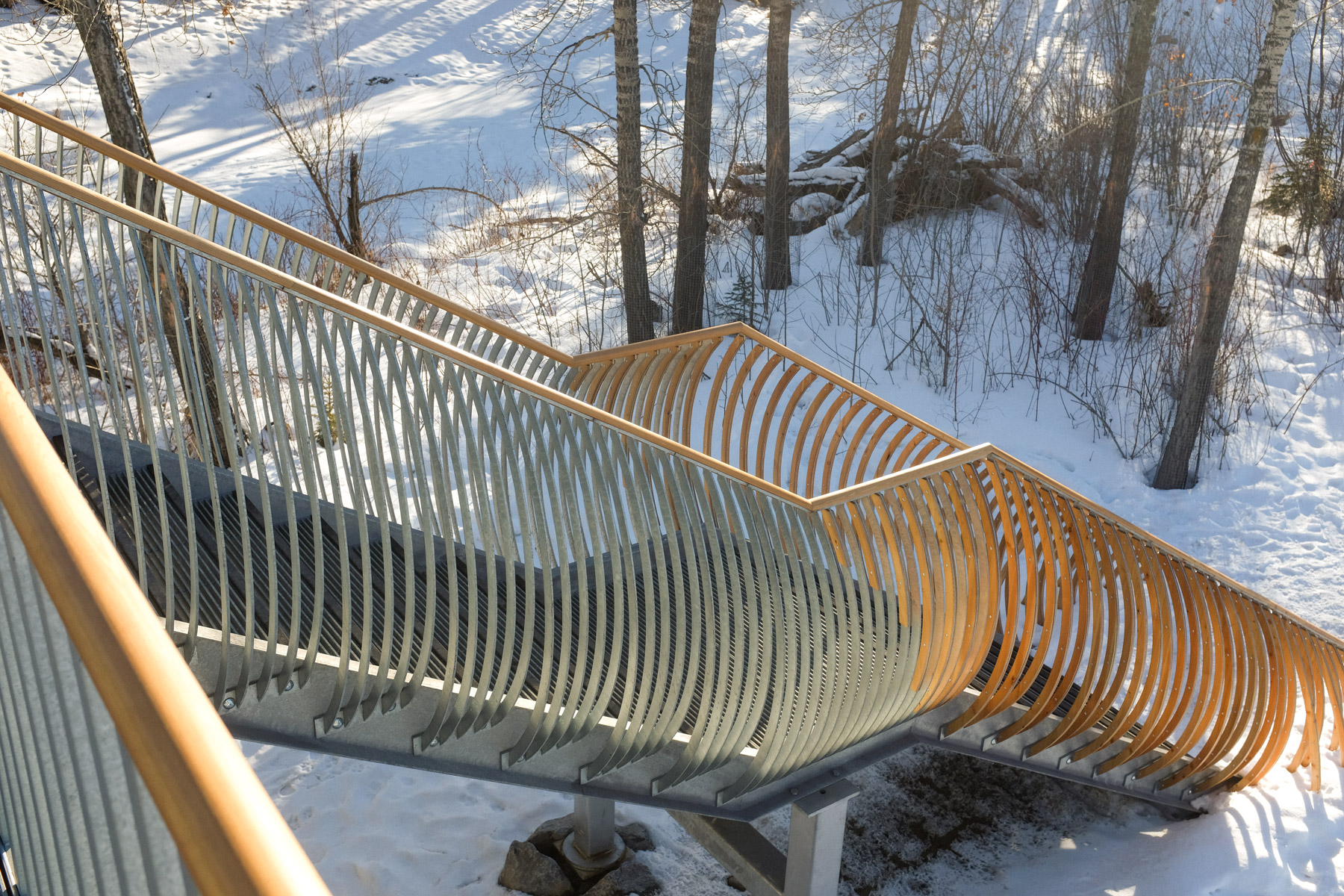
Caitlind r. c. Brown and Wayne Garrett, Fish Ladder, 2020
Staircase/Integrated sculpture
Courtesy Caitlind r. c. Brown
In our process, the conservator and the artist attend a site visit together where the conservator can tangibly demonstrate relevant site considerations in-situ. This visit is kept relatively informal: it’s an opportunity for the artist to better understand the site and ask any questions they might have as they explore their concept. For Brown and Garrett’s functional stairway installation Fish Ladder, this site visit informed research of different wood species that would be suitable for their intended use as cladding on the vertical rails of the staircase. Knowing the site as well as the general practices of City operations staff, I had concerns that the thin cuts of wood they were intending to use would be vulnerable to warping where I anticipated snow drifts would pile. Since it was still early days in the design process, we were able to integrate layers of moisture sealing protections as well as strategic mechanical restraints.
Timing the conservation reviews early in the concept and design development process is crucial to achieve a positive and collaborative relationship where the artists and the conservator trust each other. Brown and Garrett note that if a conservator or other reviewer on a design team puts forward a significant concern too far along into the artistic process, it can put the artist in a defensive place, having already invested so much in an idea that it’s hard to go backwards to resolve a fundamental flaw. Conversely, Garrett says, “based on our experience, if you can have a creative and collaborative consultation with a conservator early in your process, you only stand to benefit from that. You’re tapping into an expertise and a knowledge base that can really expand the potential of a project.”3 If raised early, conservation concerns can be opportunities for artists to problem solve and come up with new and possibly even more interesting artistic solutions. As Brown points out though, “there’s a lot of trust in that”; conservators need to “have a little faith in the artists” and allow them the opportunity and space to come up with creative solutions.4
Following the site visit and the artist’s submission of a preliminary concept, we complete a “Concept-Stage Conservation Review” that outlines all environmental, public interaction, materials, design, and maintenance considerations in detail along with recommended methods to mitigate risks. The artist can then reference this document as they finalize their concept and, if applicable, present their concept to the jury. In this way, the conservation concept review can come to defend an artwork’s feasibility to a jury. It demonstrates that the artist has already evaluated many of the risks that the jury may raise, and that they have an informed grasp of how these concerns can be mitigated in the realization of the artwork. In the case of Mia + Eric’s early concept for their work Pick, Pluck, Perch, we found that because we had already flagged the conservation and maintenance concerns inherent to the concept of a gilded tree, and had worked through the different ways these risks could be managed with the artists, we became advocates for the concept in internal decision-making circles. Our conservation voices gave The City project team the confidence to pursue the concept further, and the artists were then able to deliver a tangible proof of concept during detailed design by carrying out rigorous environmental stress testing of tree branch samples that they had gilded with various binding media.
During the detailed design stage of a commission, the conservator participates as a reviewer alongside engineers, representatives from relevant operations teams, and other subject matter experts specific to the project. Detailed design is an iterative process, and can often go through several review stages where comments must be circulated and resolved before the design can move forward. In our experience, the conservator needs to recognize where this can be labor intensive and stressful for artists and offer support where we can. However, for Eric Moschopedis of Mia + Eric, the practice of resolving comments and concerns during detailed design actually helped structure their decision-making process. In his view, conservation, fabrication, and safety requirements weren’t limits, but rather footings from which to base further design decisions.5 For instance, in their exploration of how to incorporate seating into their site design, the parameters around vandalism resistance and low maintenance requirements are what led them to incorporate granite field boulders in the work, a decision they were also happy with conceptually.
Towards the later stages of a project, we work with the artist or artist team on a stewardship manual for the artwork.6 The title of these documents was shifted from “maintenance manual” to “stewardship manual” to better serve art practices where maintenance is not a central focus. Before the program had internal conservators to support this process, the onus was primarily on the artist to develop a maintenance plan for the artwork. This often resulted in maintenance recommendations that could potentially cause harm to the work (such as inappropriate graffiti removal products), as well as maintenance schedules that were not realistic or feasible to uphold. The use of a single template for these manuals also sometimes resulted in critical gaps of information, so three stewardship manual templates were developed; for object-based works, for time-based media, and for ephemeral artworks. Since it is rare that a public artwork falls solely under any of these categories, we will often pull from all three of these templates to develop a custom stewardship manual for each artwork.
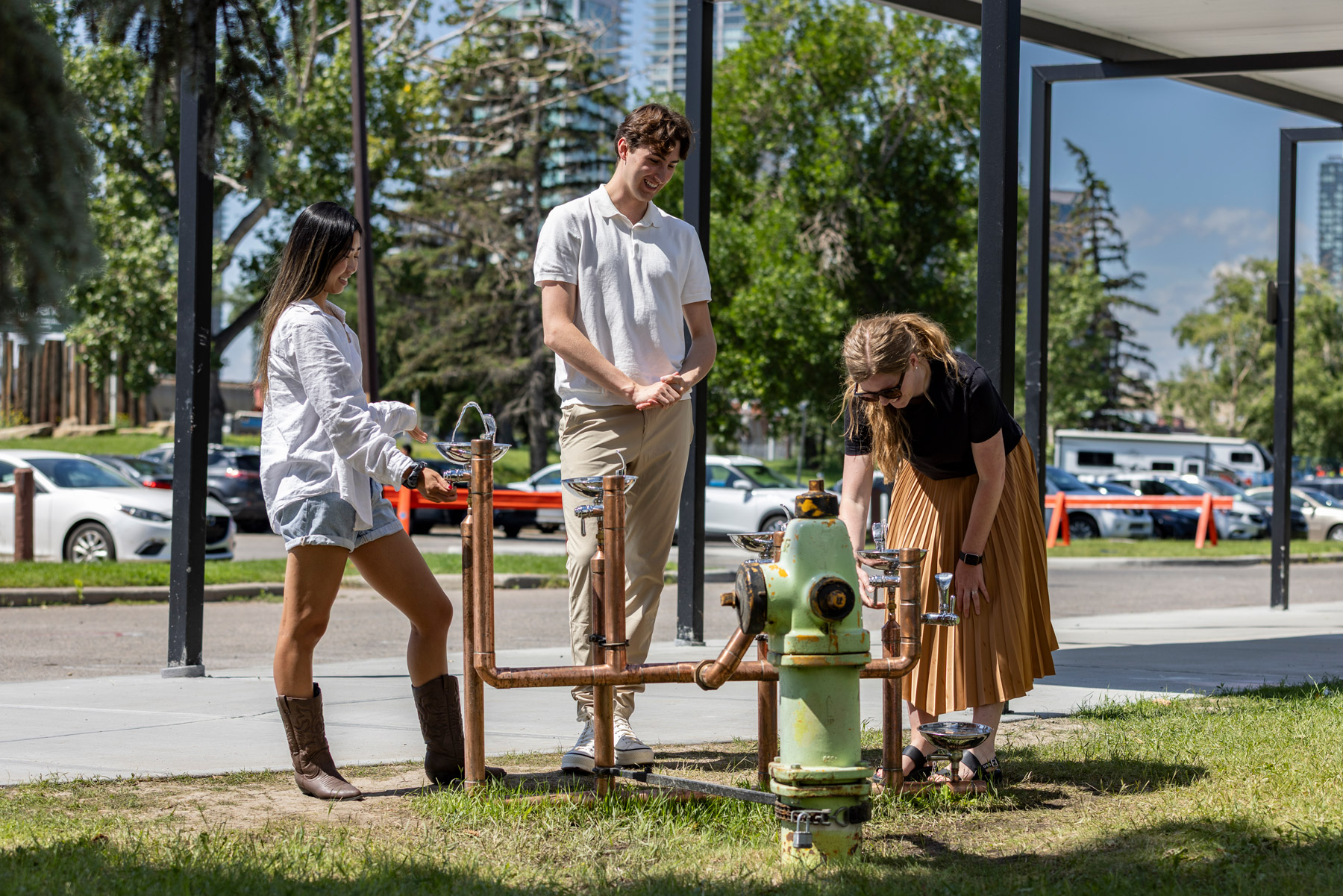
Figure 5. Sans façon, Fire Hydrant Drinking Fountains, 2012
Social practice
Courtesy The City of Calgary
In developing these manuals with the artists, they compile more than just maintenance information; they end up recording a more rounded physical and conceptual understanding of the artwork. They inform not just how an artwork should be conserved, but also how it should be articulated, catalogued, exhibited, and considered within evolving contexts. This first became clear to me while working with the artist team Sans façon, who led the WATERSHED+ initiative—an integrated public art program that was deeply embedded within the City’s Utilities and Environmental Protection department. In 2012, the team collaborated with water services staff to create Fire Hydrant Drinking Fountains, an artwork that provides drinking water to the public for festivals and temporary events in Calgary. While a comprehensive manual was made at the time of the work’s creation that outlined how the fountains were made, how it should be installed and maintained, and how and where parts could be sourced if needed, when I joined the program seven years later I still found I had many questions about the work and how I should approach its conservation in the long term. I met with the artists for an informal artist interview about the work, which led to the development of a more comprehensive stewardship manual.
At first seemingly straight forward questions I had about how the artists perceived their own work, such as “is this an installation or a functional artwork?”, led to a multifaceted understanding of the artwork as a social practice piece that extends well beyond the physical fountains themselves. This of course led to further questions relating to the artwork’s ephemeral nature, such as whether there were associated forms of visual or written documentation that should be considered part of or supportive to the work. Perhaps most pressing, I wondered how the physical components of the piece should be engaged with as time continues to distance us from the initial social practice context of the artwork. Specifically, should the fountains only be exhibited in their functional and collaborative context? If this context is significantly altered or lost, can they eventually become artefacts that tell the story of the broader artwork? As Tristan Surtees of Sans façon puts it, “the potential for unintentional (however well meaning) use or inappropriate installation could significantly change the work and even potentially contradict its meaning.”7 Listening to the artists think through these questions eventually directed us to practical guidelines for cataloguing, exhibition and conservation decisions that our team continues to refer back to today.
For Sans façon, “the implementation of the stewardship process presents the artist with agency in the life of the work, it becomes a tool to care not only for the material that the work is made from but, perhaps even more importantly as contexts change, for the intention and meaning of the work. It provides the artists with an expanded realm of influence, and a responsibility to consider the life of a work beyond its moment of installation.”8 Once all information was distilled and compiled and the manual was considered complete, both the conservator and the artists signed it, ultimately establishing and agreement as to how the artwork will be cared for over the duration of its lifespan and beyond, open to being revisited in the future if circumstances or contexts should change.9 With this agreement came an established relationship: having worked through this process together, it becomes an organic and easy practice to connect with the artists when questions about their artwork arise.
From process to practice
The adoption of a structured preventive conservation process for public art commissions has increased technical support for artists and in many instances prevented design choices that would have become later conservation issues. However, putting process into practice comes with its fair share of challenges. Despite the best intentions of conservators, not every problem can be foreseen and prevented. Even with a dedicated internal team, there is an ongoing struggle of capacity and of balancing the care of existing artworks while working to support the development of the new. It remains to be seen whether the current conservation touchpoints will be sustainable as the volume of commissioning increases.
Nevertheless, having an internal conservation team that can evolve alongside the public art collection enables an approach centered on a deepening understanding of the artworks in its care. The information gained through hands-on conservation and monitoring of artworks across the city has proven to be invaluable in guiding preventive conservation recommendations. This foundation of knowledge and experience, partnered with collaborative design review participation with artists as they envision and execute new artwork for the collection, builds trust between artists and conservators in a relationship that will be carried forward into the future care of the artwork.
1. https://www.calgary.ca/content/dam/www/ca/city-clerks/documents/council-policy-library/cp2023-03-corporate-public-art-policy.pdf (accessed 09/22/25).
2. Caitlind r. c. Brown and Wayne Garrett (artists) in discussion with the author, September 2025.
3. Ibid.
4. Ibid.
5. Eric Moschopedis (artist) in discussion with the author, September 2025.
6. We don’t have manuals for artworks by artists who are not living to collaborate on them. For legacy artworks in the collection, we follow more traditional conservation practices of research to establish the greatest understanding possible about the artwork’s materials, processes of creation, and conceptual intentions, while working with artist estates as needed.
7. Tristan Surtees (artist) in discussion with the author, September 2025.
8. Ibid.
9. We have not yet encountered a situation where we have had to revise a stewardship manual after a period of time (although we have developed many retroactively after the artworks had already existed for some time). I think we would be very open to updating the manual if the artist’s thinking about the work changed, or if physical lessons about the artwork and its conservation were learned.
Main image
David Rokeby, Calgary Scroll, 2017
Site-specific interactive installation in the form of a steel sculptural structure with embedded LED panels
Courtesy David Rokeby
Image description
A photo of a four-lane city highway at dusk, below ground level. There are four cars driving, two on the right away from the camera and two toward the camera on the left. Tall, vertical lights illuminate each side of the highway. There is an illuminated sign with text, the entirety of which is not visible, which reads: ‘…SATISFACTION, AS HE HAS PERFORMED HIS DUTIES THROUGHOUT THE YEAR FAITHFULLY AND EARNED HIS MONEY. 1897…”. Above the walls of the highway are railings on each side, an overpass that crosses the highway, and tall buildings in the distance.